
How Does An Implant Compare to a Real Tooth?
Temecula, CA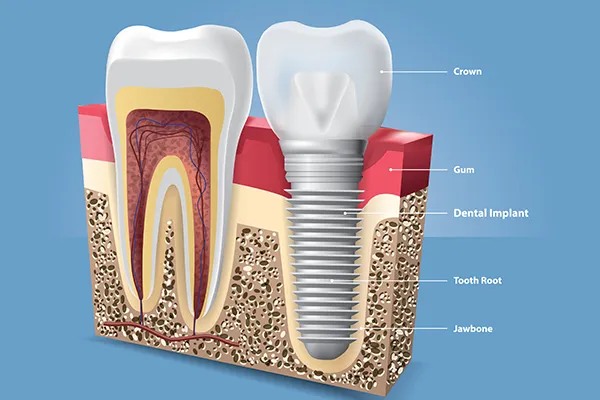
If you're considering getting a dental implant at Picasso Dental Care, you may be wondering just how close it comes to the real thing. It's a fair question, and the answer goes deeper than appearances. From the way a dental implant is anchored in your jaw to the way it functions when you bite into an apple, the comparison between a dental implant and a natural tooth is surprisingly close, though not without a few meaningful differences. The Structure of a Natural ToothA natural tooth has two main parts: the crown and the root. The crown is the visible portion above the gum line, and the root extends down into the jawbone, anchoring the tooth securely in place. Surrounding the root is a thin layer of tissue called the periodontal ligament, which acts as a natural cushion between the root and the bone. This ligament allows for a slight amount of flex when you chew and helps transmit sensory information, so you can feel the difference between biting down on something hard versus something soft. The root also plays a role that most people don't think about: it stimulates the jawbone. Every time you chew, the pressure travels through the root and into the bone, signaling the body to continue regenerating bone tissue in that area. Without this stimulation, the bone gradually resorbs, which is why patients who have missing teeth for an extended period often notice changes in their facial structure over time. How an Implant Mirrors That StructureA dental implant is designed to replicate the two-part structure of a natural tooth. The implant post, which is placed into the jawbone, functions like a tooth root. It is made of biocompatible titanium. Biocompatibility means the implant can function without causing any harm or injurious effects to the surrounding tissues in your mouth. This titanium post integrates with the surrounding bone through a process called osseointegration. Osseointegration means that over time, the bone actually fuses to the surface of the post, creating a stable, permanent foundation. Once the implant has fully integrated and the surrounding tissue has healed, a dental crown is attached to the top of the post. This crown is custom-made to match the shape, size, and shade of your surrounding teeth, giving it a natural appearance that blends with your smile. What an Implant Does That a Real Tooth CannotIn a few ways, a dental implant may even have advantages over a natural tooth. Because the crown is a prosthetic, it is not vulnerable to decay. Cavities will not form on the implant crown the way they can on a natural tooth. For patients who have struggled with tooth decay, this is one less concern. Implant crowns are also highly resistant to staining from coffee, tea, and other pigmented foods and beverages over the long term, especially when properly cared for. Where a Natural Tooth Has the EdgeNatural teeth have capabilities that tooth implants cannot fully replicate. The periodontal ligament surrounding a natural tooth root gives it a slight, almost imperceptible amount of give, which helps absorb the force of chewing. Dental implants integrate directly with the bone, so this cushioning effect is absent. Most patients adjust to this without any noticeable issue, but it is a structural difference worth understanding. The periodontal ligament also contains nerve endings that allow natural teeth to detect pressure with great sensitivity. A dental implant, while functional and stable, does not have this same level of tactile feedback. You can still chew comfortably and effectively, but the sensation is not identical to that of a natural tooth. Additionally, because natural teeth are connected to living tissue, they are capable of minor positional movement over time. This is part of why orthodontic treatment works. Dental implants, once osseointegrated, do not move. This is generally a benefit in terms of stability, but it does mean that if orthodontic treatment is planned, timing and placement need to be coordinated carefully with your dental team. Caring for an Implant vs. a Natural ToothThe daily maintenance routine for a dental implant closely resembles what you already do for your natural teeth. Brushing twice a day and flossing once a day remain essential. While the implant crown cannot develop a cavity, the tissue surrounding the implant post is still vulnerable to inflammation if plaque is allowed to accumulate. This condition, called peri-implantitis, is similar to periodontal disease and can compromise the stability of the dental implant over time if left unaddressed. To properly care for your dental implant be sure to:
Routine dental visits to Picasso Dental Care allow our dentists to monitor the health of the surrounding tissue and the integrity of the implant and crown. Catching any early signs of concern allows for simple interventions rather than more involved treatment. Is an Implant the Right Choice for You?For patients who are good candidates, a dental implant is often considered the most complete tooth replacement option available. It restores function, preserves jawbone health, and provides a result that looks and feels like a natural tooth. Whether you're replacing a single tooth or multiple teeth, our team at Picasso Dental Care can evaluate your oral health and help you understand whether a dental implant is the right path forward. To schedule a consultation at our Temecula office, contact us today at (951) 383-2021. |
Contact InformationPicasso Dental Care 44605 Avenida De Missiones, Suite 101 Temecula, CA 92592-5001 (951) 383-2021 picassodentalcare@gmail.com Follow Us |
